Is Your Irrigation System Performing?
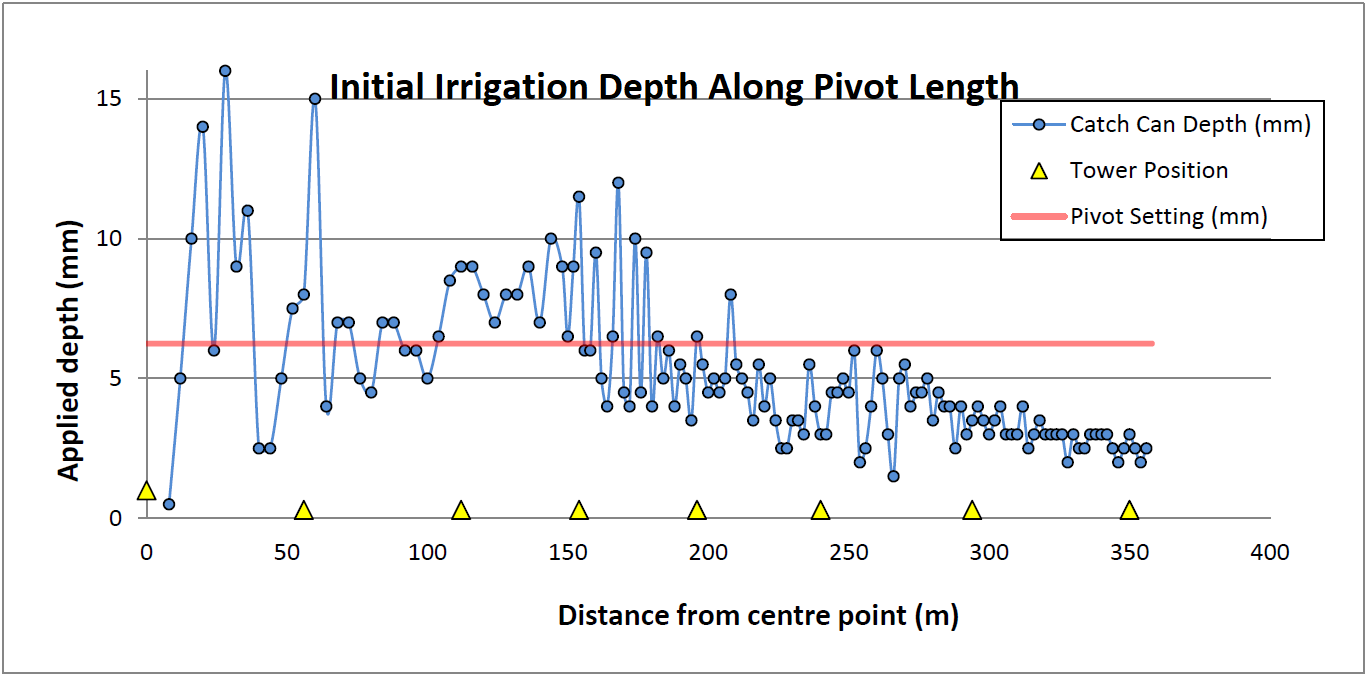
Most irrigation systems are designed for a target distribution uniformity — but in practice, nozzle wear, pressure variation, blockages, and poor design mean actual distribution may be much less even. A catch can test gives you the data to know for sure.
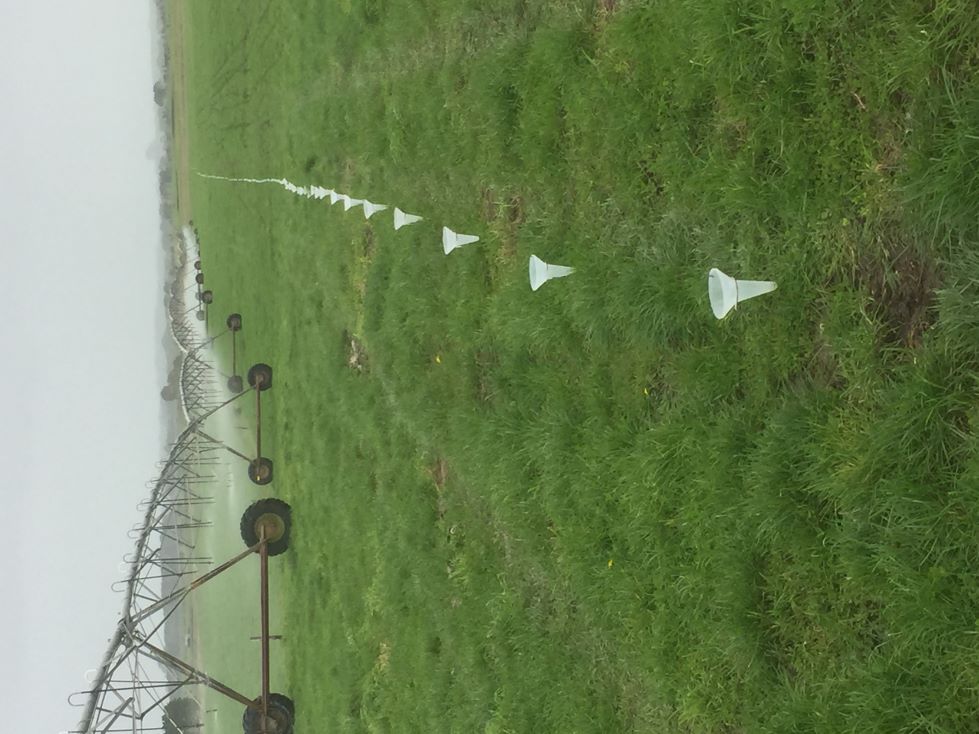
Benefits of an irrigation system maintenance check — Catch Can Tests
What Is a Catch Can Test?
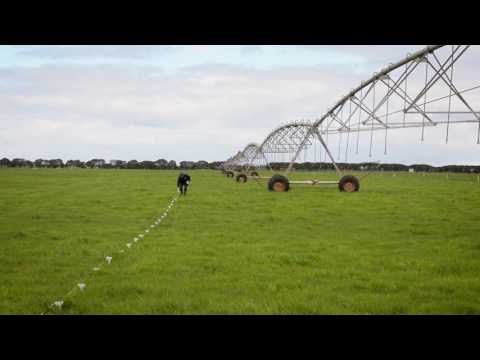
Catch cans are small containers placed at regular intervals across the irrigated area during a normal irrigation event. The water collected in each can is measured and compared across the grid. The result is a Distribution Uniformity (DU) percentage — a score of 100% means perfectly even, while lower scores indicate variation that wastes water and impacts crop performance.
Why It Matters
If your DU is low, irrigating to the field average means some areas are being over-watered while others are under-watered. Over-watered areas cause leaching of nutrients and root disease, while under-watered areas suffer stress and yield loss. Identifying and fixing problem areas directly improves both efficiency and yield.
What We Provide
- On-site catch can testing with grid layout to suit your system
- Distribution Uniformity (DU) calculation
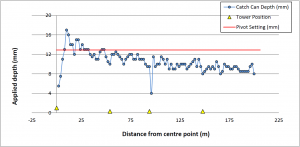
- Mapped results showing spatial variation across the irrigated area
- Written report with findings and recommendations
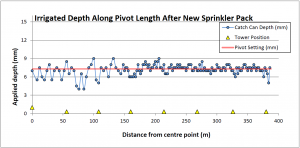
- Advice on nozzle replacement, pressure regulation, or system redesign
- Follow-up testing available after remediation
Suitable For
- Centre pivot and lateral move irrigators
- Overhead sprinkler systems
- Traveller irrigators
- Solid set and portable sprinkler systems
Specifications
OutputDU % score + spatial map
MethodPhysical catch can grid
ReportWritten findings + recs
Systems testedPivot, overhead, traveller, solid set
Follow-upAvailable after remediation
DeliveryOn-site service
Ready to talk?
Tim can help you work out the right system for your property and budget.
Send an Enquiry