Soil Moisture in the 21st century
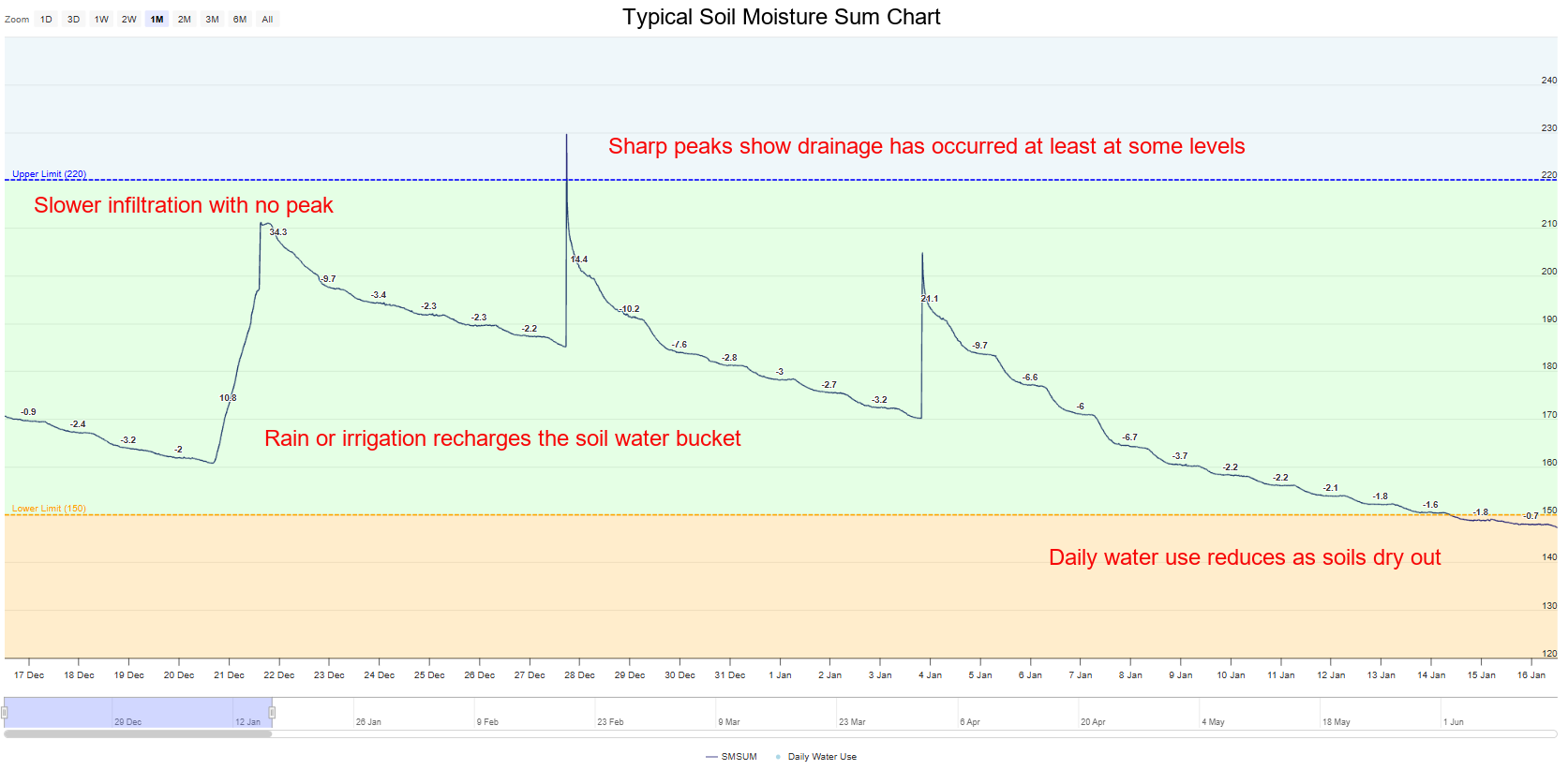
A rain gauge tells you what fell. An irrigation meter tells you what you applied. But neither tells you how much is in the soil moisture backet — or how much water is left in the bucket for the crop or pasture to use. Soil moisture monitoring tells you that 24/7, 365. By measuring actual water content at multiple depths in real time, you can see how water moves through your soil profile, when the root zone is running low, and whether your last irrigation hit the mark or missed it.
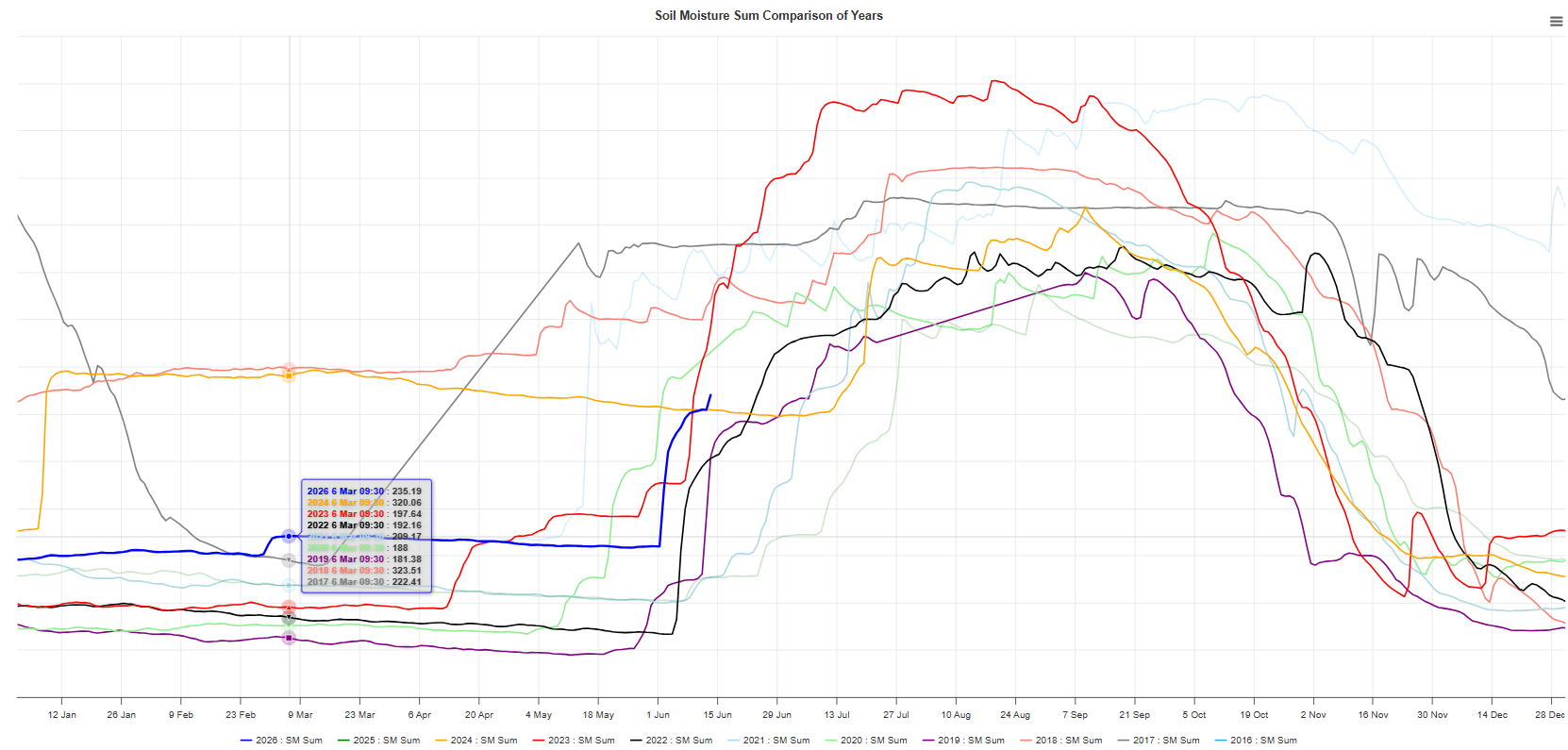
In dryland cropping, soil moisture probes are just as valuable. Knowing how much stored water is in your profile at seeding shapes decisions about variety selection, plant population, and fertiliser investment. Through the season, watching how rapidly the crop draws down the profile tells you how it's performing under the conditions — and how much buffer remains if rain is delayed. This feeds directly into mid crop decisions such as fertiliser applications and disease management, and gives the eaerly heads up of water availability to the crop for grain fill. At harvest, a seasons worth of probe data starts to answer the questions that matter most: what drove yield this year, and what can we do differently next season.
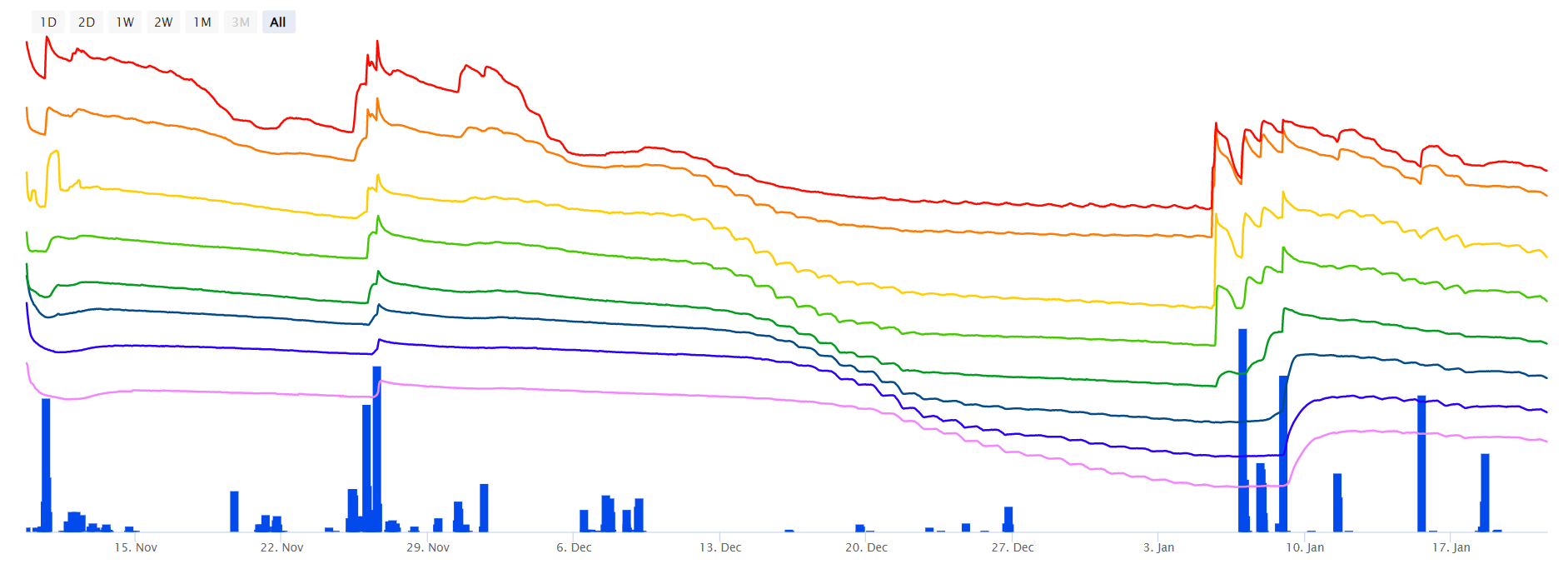
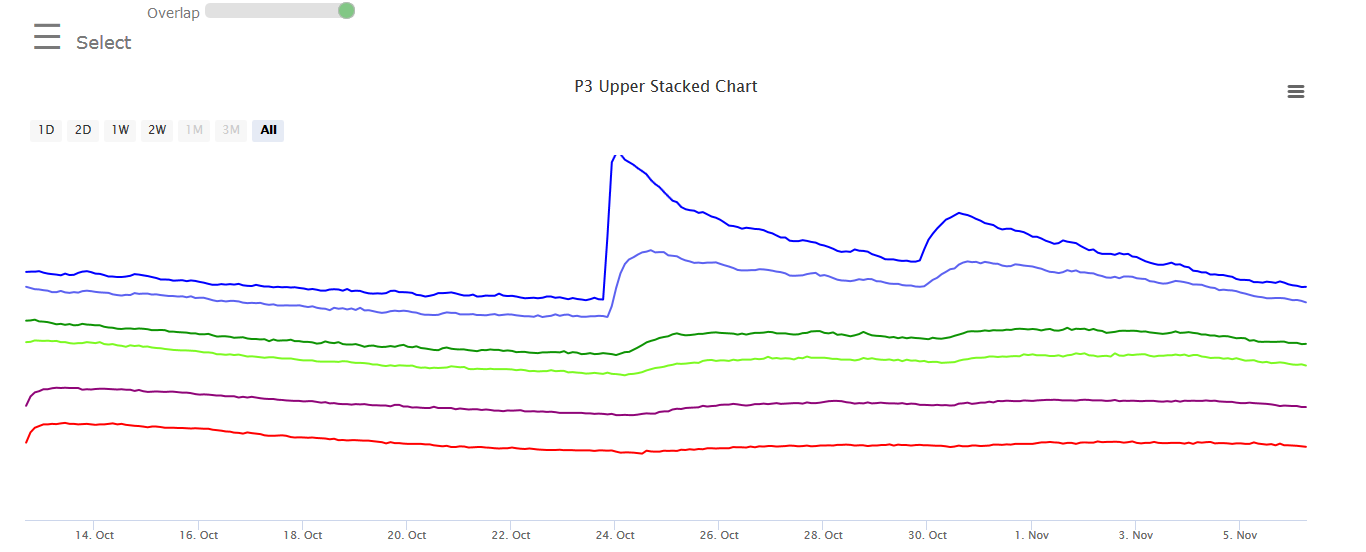
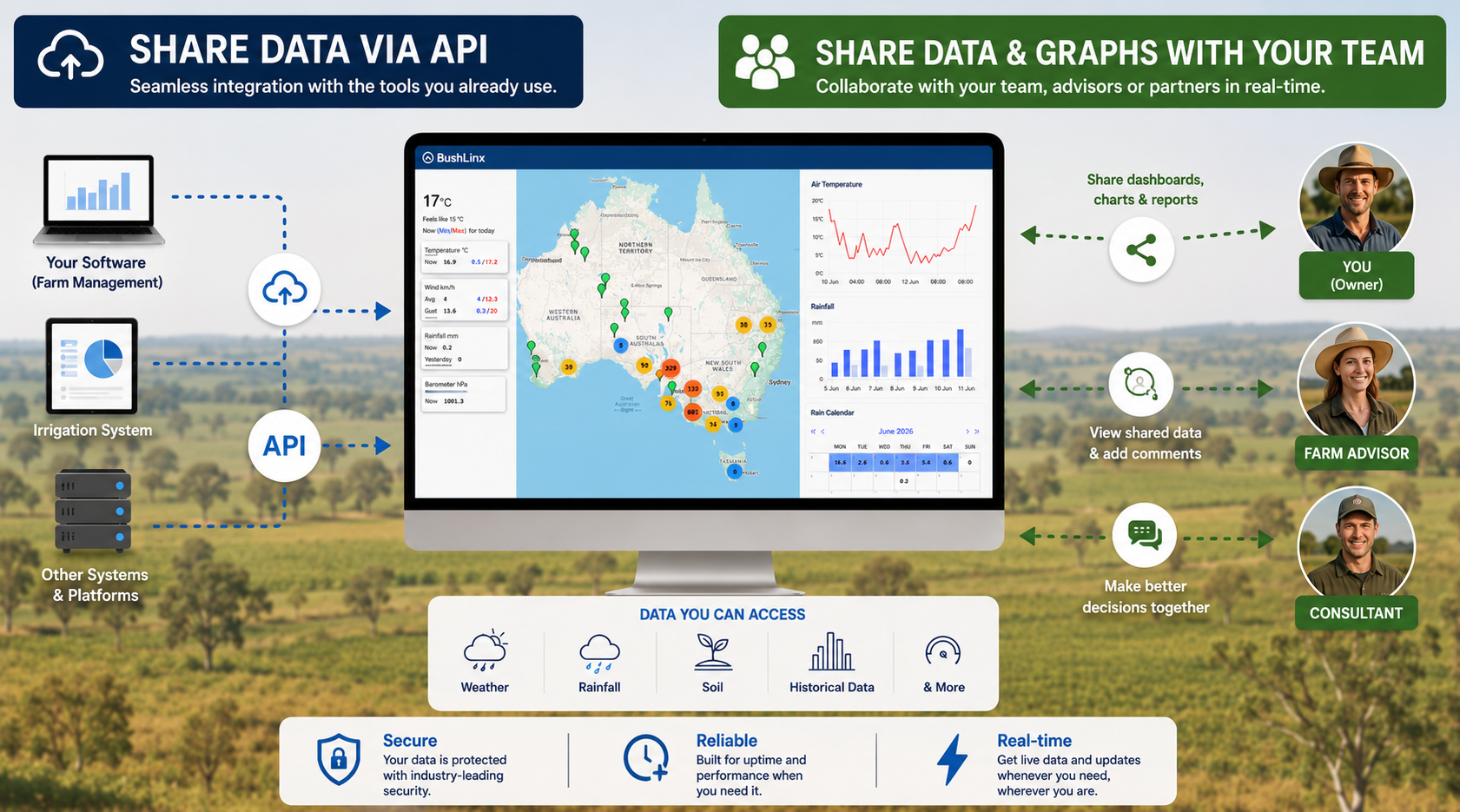
BushLinx® integrates directly with your soil moisture probes, graphing every sensor depth as well as calculating, summarizing, forecasting and predicting continuously so you can see not just the current reading but the full trend — how the profile is wetting up, how fast it's drying down, what the long-term pattern looks like across seasons and what is likely to happen next with predictions. For the more advanced farmer BushLinx® combines soil moisture data with on-farm rainfall and forecast data (and ETo data for irrigation), giving you a complete picture of your water balance from the paddock up and providing answerws to what crop management or irrigation schedule is coming next.
There are 2 ways of measuring soil moisture. We can use a sensor to measure water stress ie how hard the plant has to work to get water - these sensors are most commonly called Matric Potential, or Tension sensors. The second is to use what is called Capacitance Probes - which measure how much water is in the soil rather than plant stress. Both have their strengths and weaknesses - BushLinx handles both with ease. Chat to us about which one is right for your situation. Information of both types is on this page, and what application they might be best suited to.
Soil Moisture for Cropping
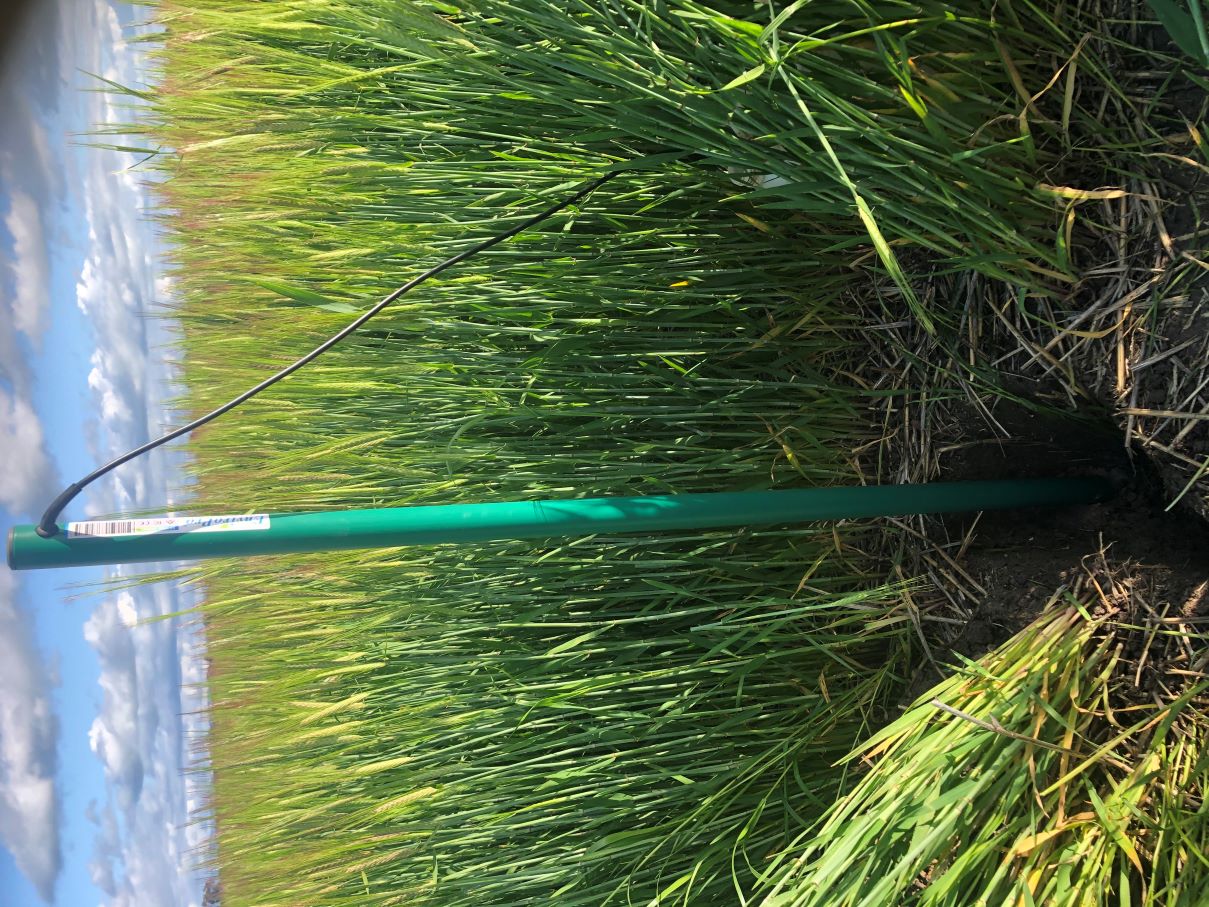
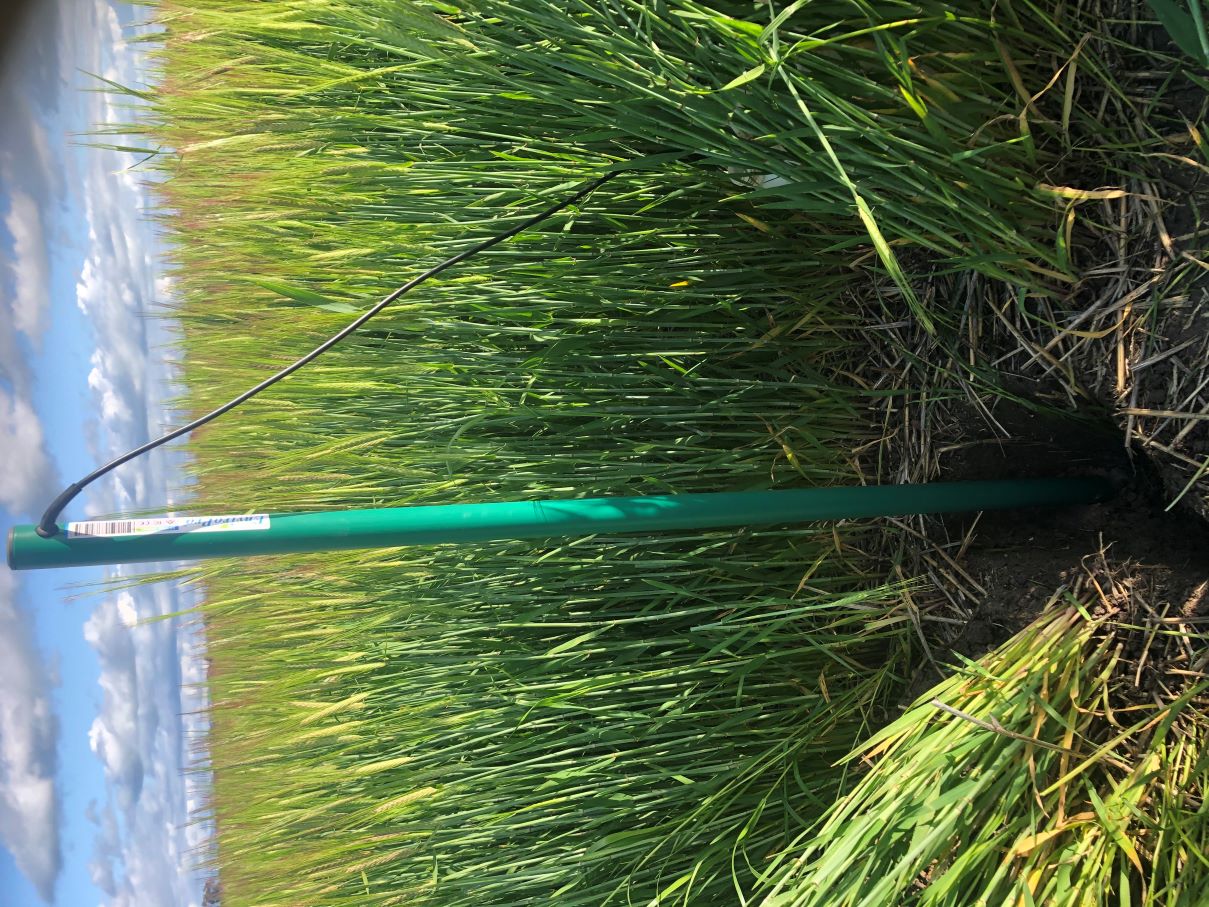
In dryland cropping, understanding your soil water availability is critical for making sound agronomic decisions — from planting date and variety selection to nitrogen management and final yield expectations. Installing Probes with sensors at multiple depths show you not only the total water in the soil profile but also the availability of water throughout the root zone and how it changes through the growing season. Root development and final depth at harvest is clearly visible, allowing assessment of how much stored water is still in the profile and avialable for a crop next year.
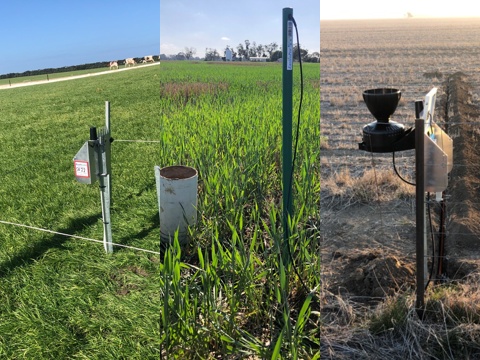
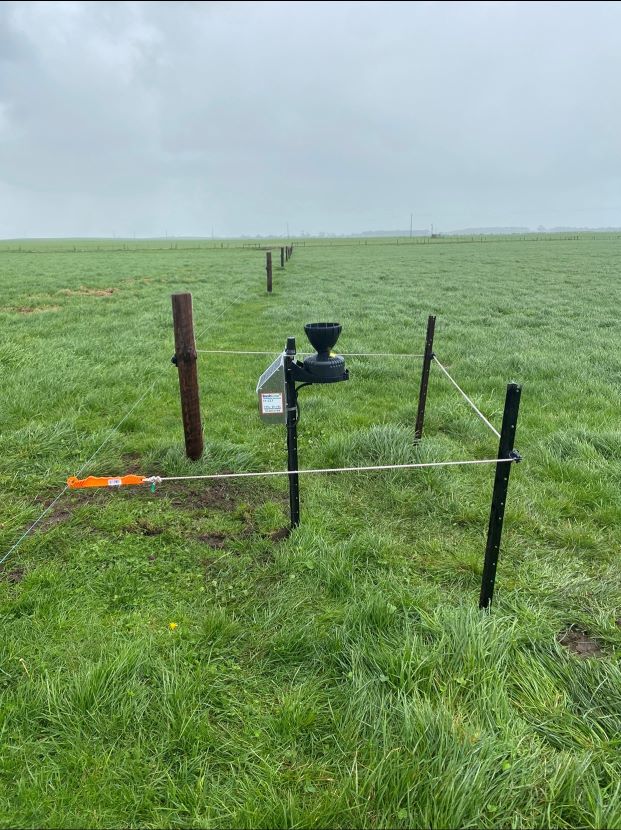
The most common hardware selection for measuring soil moisture in cropping is a capacitance probe at 120cm long measuring Soil Moisture and Soil Temperature, and a Rain Gauge. Probes can also be added to our Weather Stations, effectively leveraging the fact that the data logger is already there, so lets get the most out of it.
Specifications - Soil Moisture for Cropping
Helps me withUnderstanding soil moisture
Crop water availability
Fertiliser decisions
Crop type selection
Yeild Prediction
Cutting for hay
Measurement typeCapacitance - VWC %
Standard MeasuresMoisture: mm or %
Temp: Deg C
Option to measureSalinity: EC
Probes available40cm 4 sensor
80cm 8 sensor
120cm 12 sensor (recommended)
160cm 16 sensor
What probes give meSM Sum and split Sums
Individual Stacked Sensors
Daily Water Use
Soil Moisture Bucket
Crop Stress Index (coming soon)
Data sharingWith agronomist via BushLinx®
Soil typesAll, including heavy clay
InstallationProfessional install Highly recommended
Soil Moisture for Irrigation - Capacitance Probes
For irrigated crops and horticulture, soil moisture monitoring allows you to irrigate by what the soil and crop or pasture is actually telling you, rather than by a schedule or a rule of thumb. You can visually see haw much water is in the soil, haw much the crop or pasture is actually using per day, how stressed the plants are and what depth the roots are extracting water from. This allows you to use irrigation to target replacing the water used by the plant at the depth it is being used from, which is where the roots actually are. Driving efficiency, managing crop stress, growth behaviour and ultimately driving production.
When it comes to applying liquid fertilisers through the irrigator - a common practice now a days, knowing the soil has room for the fertile water and what depth it will soak in to means you have control and confidence your fertiliser will have maximum bang for buck and is not being wasted.
When combined with an on-farm weather station and Crop Water Use calculations (ETo), you get a complete water balance — inputs from rainfall and irrigation matched against crop demand. This allows a direct and visual real time measurement of crop and pasture stress, honing your irrigation and crop management to the next level
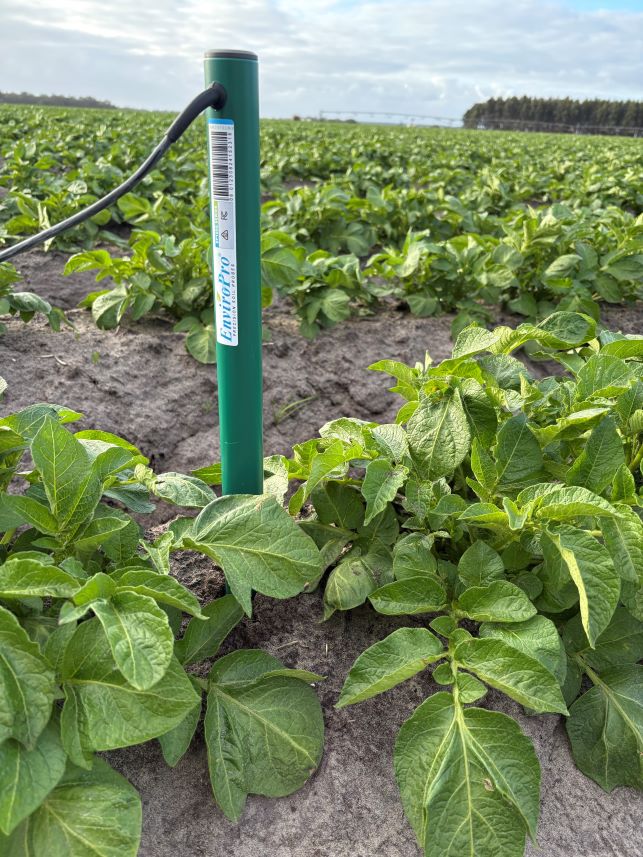
The most common hardware selection for measuring soil moisture in irrigated crops is again capacitance probes, either a 40cm or an 80cm Soil Moisture Probe (occasionally 120cm probe) measuring Soil Moisture and Soil Temperature, and a Rain Gauge. The probe length is chosen using a combination of soil depth available, crop or pasture type and what depth your irrigation setup can actually manage soil moisture to. We're aiming to measure and get the information needed to manage the crop or pasture behaviour. Sometimes measuring deeper than the irrigation setup can push water to is also an advantage with deep rooted crops.
Specifications - Capacitance Probes for Irrigation
Helps me withUnderstanding soil moisture
Crop water availability
Fertiliser decisions
Daily Crop Water Use
Yeild Prediction
Irrigation Scheduling made easy
Measurement typeCapacitance - VWC %
Standard MeasuresMoisture: mm or %
Temp: Deg C
Option to measureSalinity: EC
Probes available40cm 4 sensor
80cm 8 sensor (recommended)
120cm 12 sensor
160cm 16 sensor
What probes give meSM Sum and split Sums
Individual Stacked Sensors
Daily Water Use
Soil Moisture Bucket
Crop Stress Index (coming soon)
Data sharingWith agronomist via BushLinx®
Soil typesAll, including heavy clay
InstallationProfessional install Highly recommended
Soil Moisture for Stress Sensitive Crops — Matric Potential Sensors
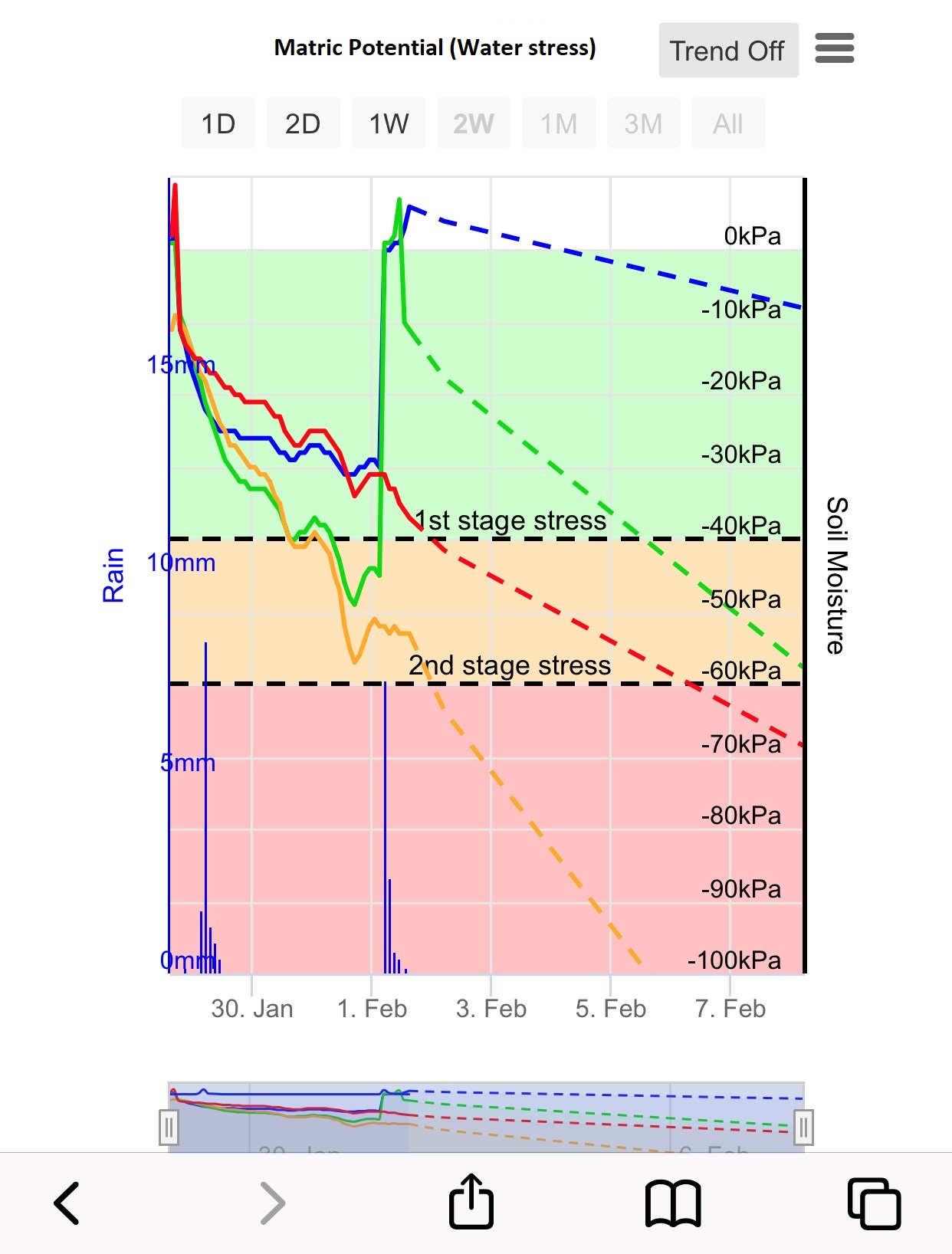
Capacitance probes measure how much water is in the soil. Matric potential sensors measure something different and equally important — how hard the plant has to work to pull that water out. A soil can hold the same volume of water and yet have it barely accessible to a plant in a heavy clay, or freely available in a sandy loam. Matric potential cuts through that variability and gives you a direct measurement of plant water stress — the same signal the root is experiencing in real time.
Matric potential is measured in kilopascals (kPa). At 0 kPa the soil is saturated. As soil dries, the reading moves negative — most crops begin to experience measurable stress somewhere between -40 and -100 kPa depending on the crop, and below -200 kPa many stress-sensitive crops will have already suffered yield or quality impacts that can't be recovered. The sensor tells you exactly where you are on that scale, continuously, so you can irrigate before stress takes hold rather than after you can see it.
This is particularly powerful for crops where stress has an outsized impact on quality or yield — viticulture, vegetables, potatoes, onions, brassicas, ryegrass and clovers for seed production, and intensive pasture systems. In these crops, staying within a tight moisture window isn't just good management — it's the difference between a marketable product and a compromised one. A matric potential sensor placed at root depth gives you that window clearly and continuously, with alerts available in BushLinx® the moment you approach a threshold.
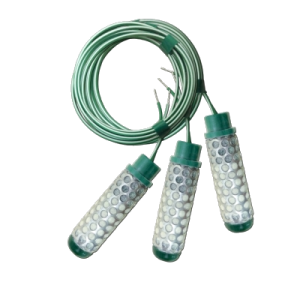
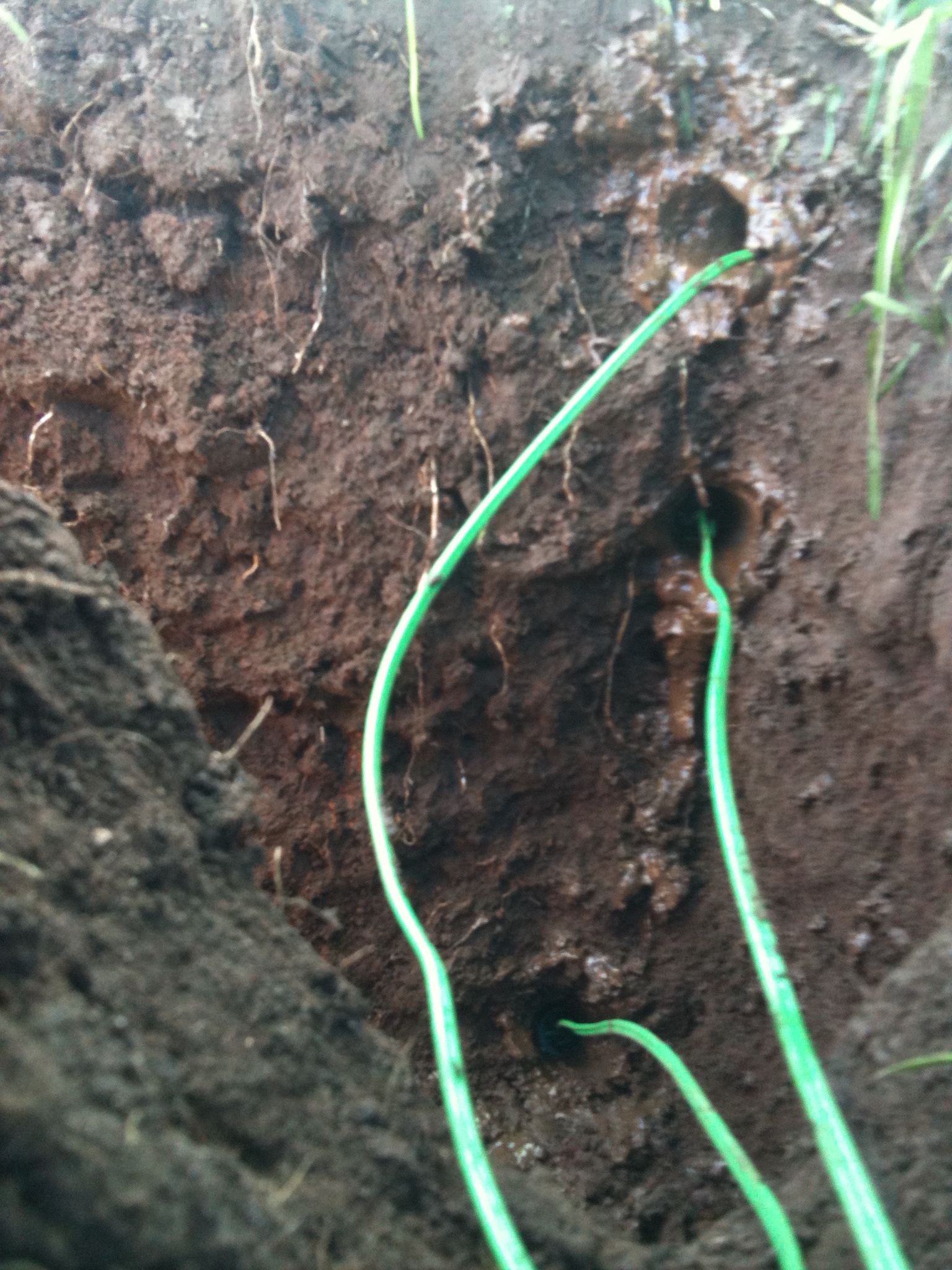
We offer two matric potential sensor types to suit different conditions. Watermark sensors are the most common choice for water-sensitive crops in moderate soils, covering the range from saturation to approximately -200 kPa — the critical zone for most horticultural and pasture applications. For heavier clay soils or situations where drier conditions need to be tracked, the GB Heavy sensor extends that range further. Both integrate directly with BushLinx® data loggers and stream readings live to the platform alongside any capacitance probe or weather station data you already have.
Specifications - Stress Sensitive Crops
Helps me withUnderstanding soil moisture
Crop water availability
Fertiliser decisions
Daily Crop Water Use
Yeild Prediction
Irrigation Scheduling made easy
Measurement typeMatric Potential - kPa
Standard MeasuresMoisture: kPa
Option to measureTemperature: Deg C
Probes availableSingle level sensors
3 x sensor depths (recommended)
1 - 4 depths available
What probes give mewater stress at each depth
Individual Stacked Sensors
Soil Moisture Bucket on a stress scale
Data sharingWith agronomist via BushLinx®
Soil typesAll, including heavy clay
InstallationProfessional install Highly recommended
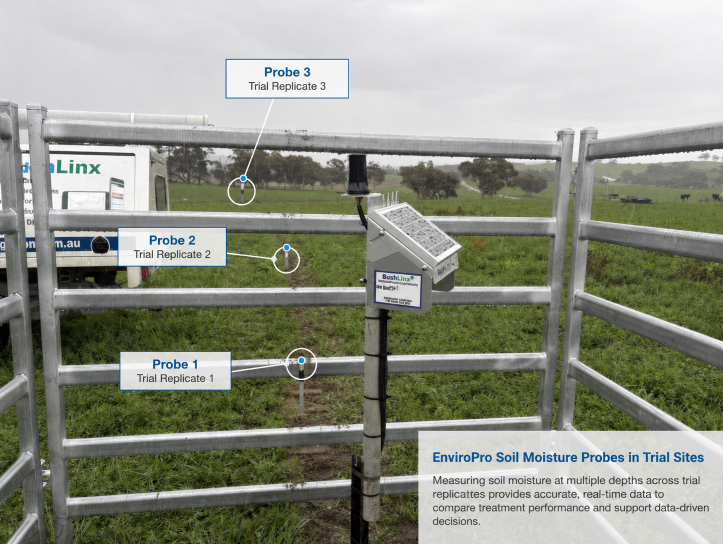
EnviroPro Soil Probes
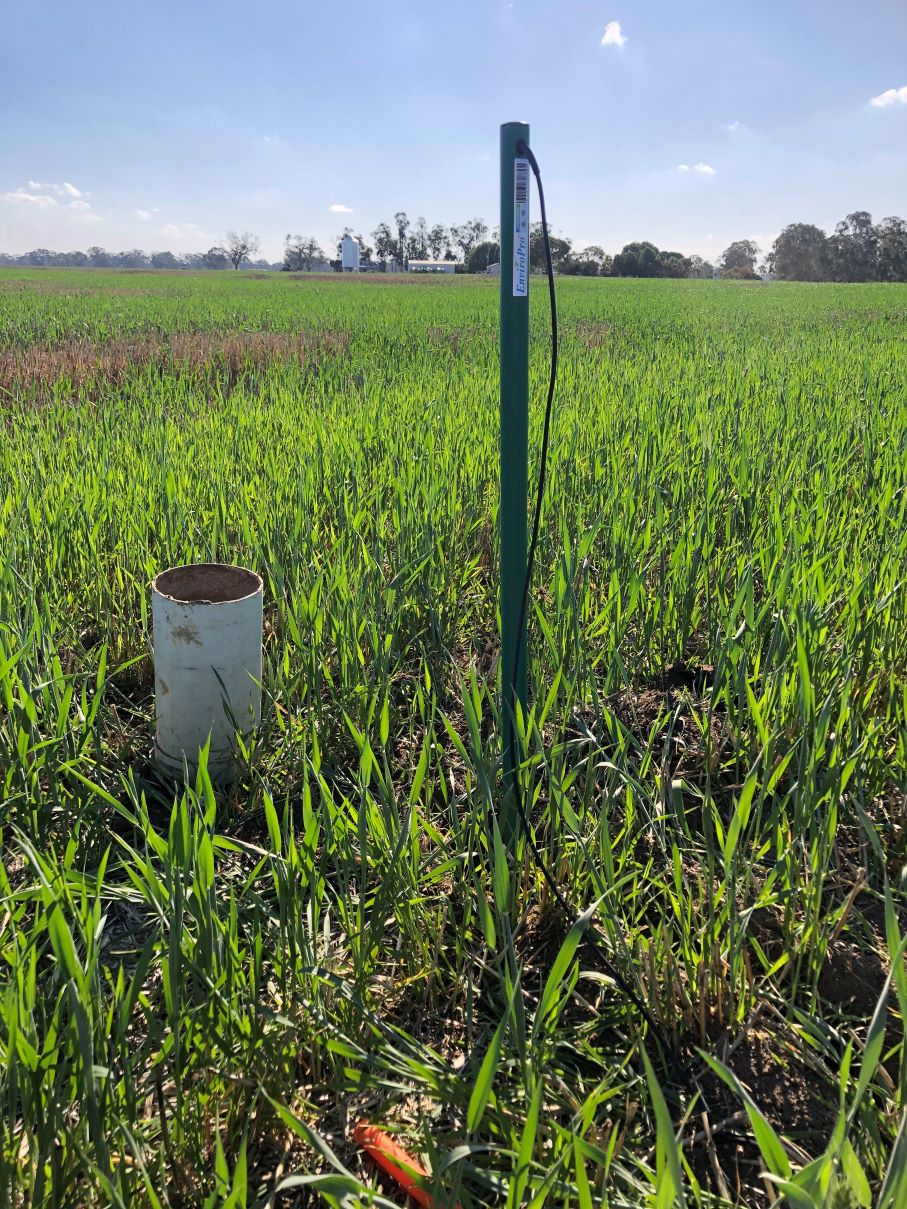
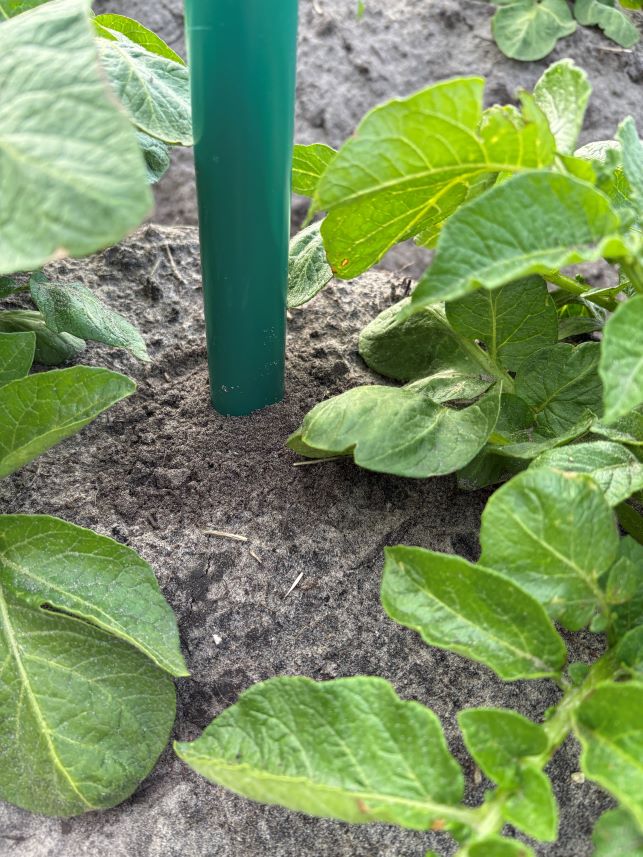
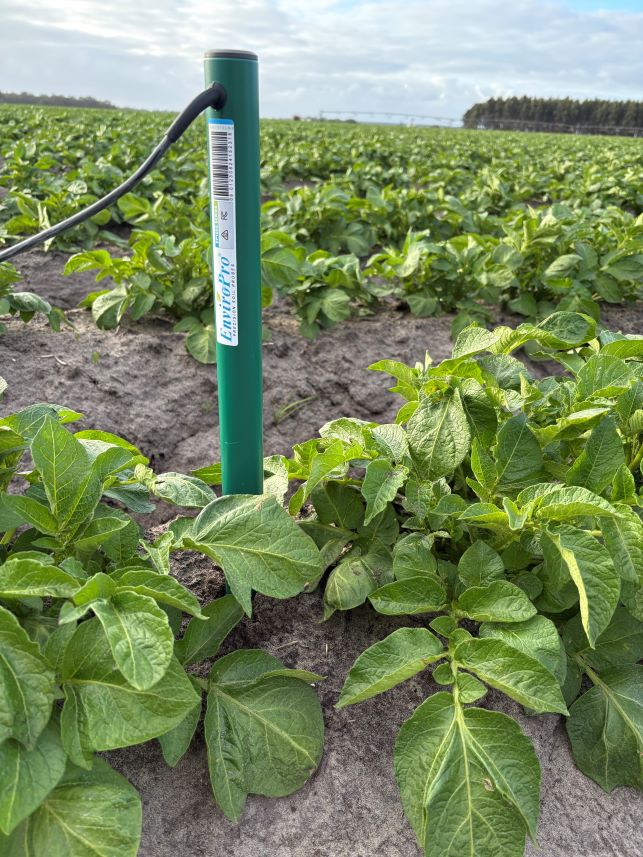
We supply and install the EnviroPro range of continuous soil moisture profiling probes. These multi-sensor rods measure volumetric water content (VWC%) and soil temperature at multiple depths simultaneously — giving you a complete picture of the soil profile from a single installation point.
- Measurements at 10cm, 20cm, 30cm, 40cm, 60cm, 80cm, 100cm depth
- Volumetric Water Content (%) at each depth
- Soil temperature at each depth
- Suitable for all soil types including heavy clays
- Continuous logging — not just snapshots
- Integrates with BushLinx® for graphing and alerts
Specifications - EnviroPro Soil Probes
Helps me withUnderstanding soil moisture
Crop water availability
Fertiliser decisions
Daily Crop Water Use
Yeild Prediction
Irrigation Scheduling made easy
Measurement typeCapacitance - VWC %
Standard MeasuresMoisture: mm or %
Temp: Deg C
Option to measureSalinity: EC
Probes available40cm 4 sensor
80cm 8 sensor
120cm 12 sensor
160cm 16 sensor
What probes give meSM Sum and split Sums
Individual Stacked Sensors
Daily Water Use
Soil Moisture Bucket
Crop Stress Index (coming soon)
Data sharingWith agronomist via BushLinx®
Soil typesAll, including heavy clay
InstallationProfessional install Highly recommended
Sharing Soil Data With Your Agronomist
Soil moisture is one of the most information-rich measurements you can take on a farm — its full value is unlocked when your agronomist is in on the data looking at it alongside you. The decision to apply fungicide, push nitrogen, adjust an irrigation trigger, or write off a paddock and cut losses early are all better made when soil moisture data is part of the conversation. That data exists on your farm right now. The question is whether your advisors can see it.
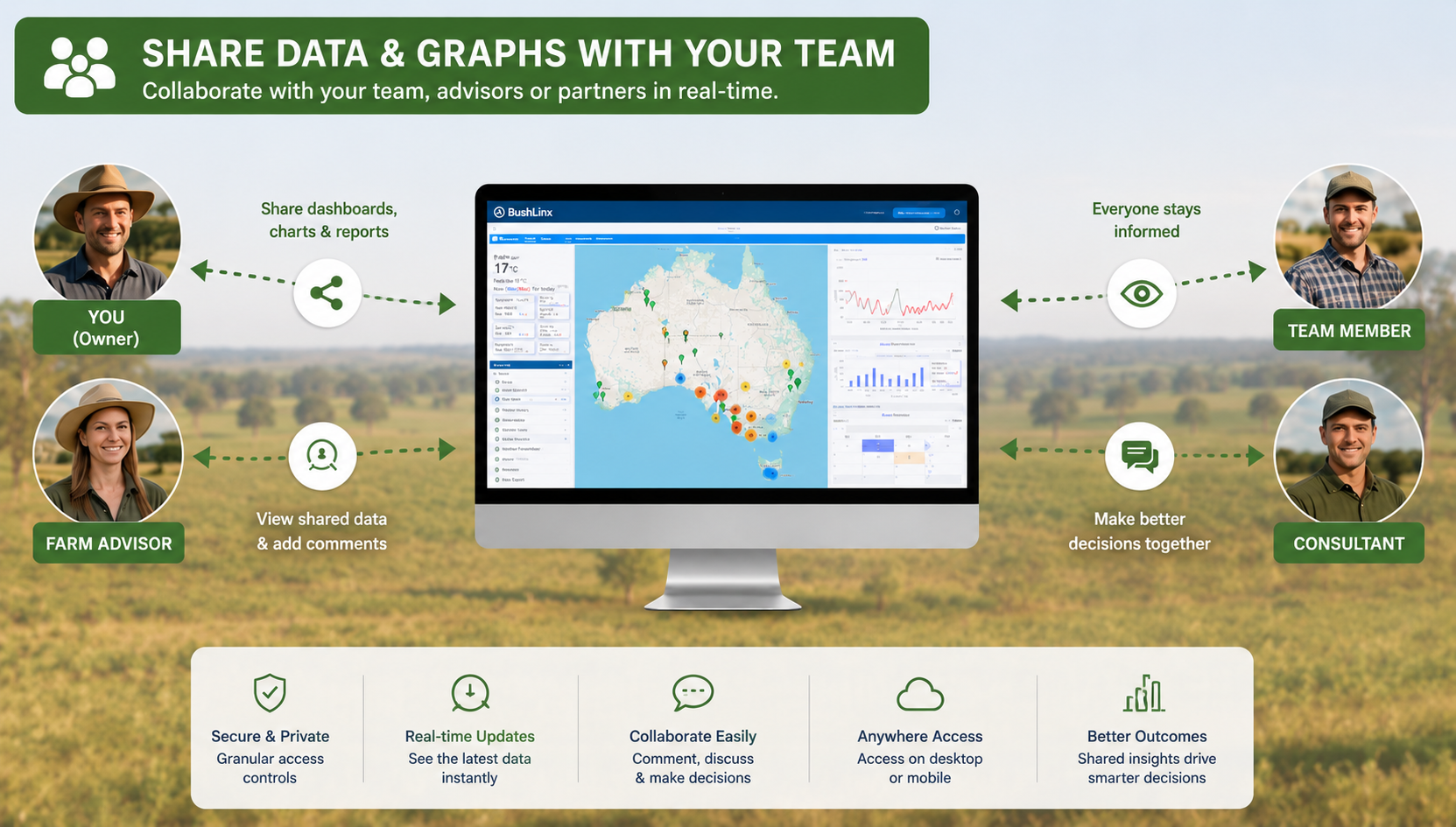
BushLinx® lets you share your soil moisture data directly with your agronomist, consultant, or irrigation advisor. They get their own login — read-only access to your live readings, full history, graphs, and calculated outputs like daily water use, soil moisture sum, and stress index. They can look at your data before they call, before they visit, and between visits when decisions come up mid-season. No more relying on what you can describe over the phone. No more advice based on what the district average looked like last time someone checked. They're working with your real data, from your paddock, in real time.
Good agronomic advice is expensive. Every visit, every call is more valuable when the advisor walks in already knowing what your soil moisture status is. Shared soil moisture data doesn't replace the agronomist — it makes every interaction with them more valuable.
Specifications - Data Sharing
Helps me withSecond opinion
Agronomist involvement
Networks give regional context
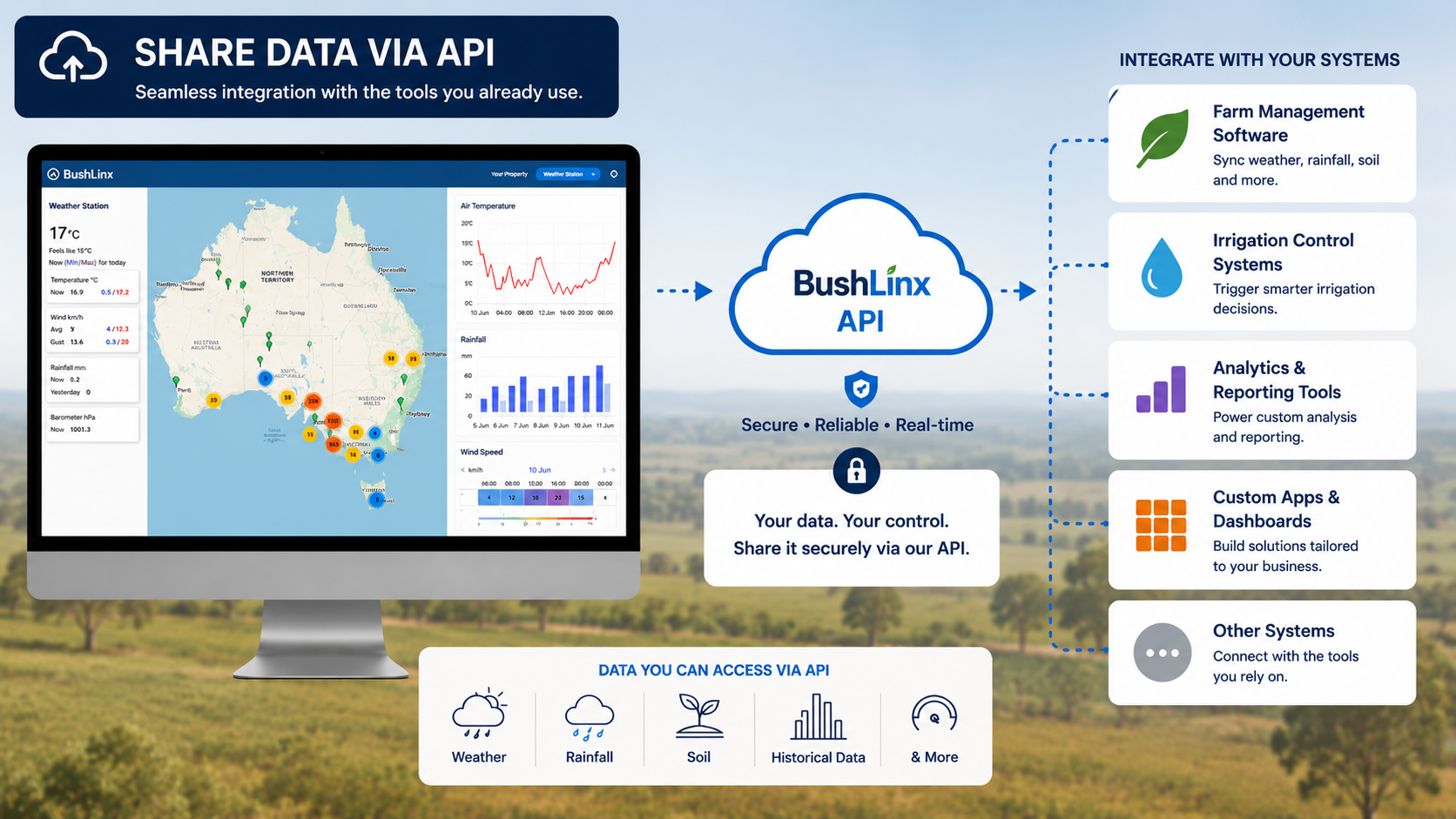
Link software together
What can I share myselfGraphics
Dashboards
Maps
Site Data
Is API availableYes
Requires a programmer
Who controlls sharingYou do
How is sharing doneNothing is shared automatically
How do I shareUse the share button for graphics and dashboards
I need helpContact your service provider
Applications
- Irrigation scheduling — trigger irrigation at the right refill point
- Dryland crop water management — track stored soil water
- Deficit irrigation — maximise water use efficiency
- Drainage monitoring — detect waterlogging before it causes damage
- Research and trial sites
Specifications - Applications
Helps me withUnderstanding soil moisture
Crop water availability
Fertiliser decisions
Daily Crop Water Use
Yeild Prediction
Irrigation Scheduling made easy
Measurement typeCapacitance - VWC %
Matric Potential (stress)
Standard MeasuresMoisture: mm or %
Temp: Deg C
kPa
Option to measureSalinity: EC
Probes availableSingle sensor
40cm 4 sensor
80cm 8 sensor
120cm 12 sensor (recommended)
160cm 16 sensor
What probes give meSM Sum and split Sums
Individual Stacked Sensors
Daily Water Use
Soil Moisture Bucket
Crop Stress Index (coming soon)
Direct measure of water stress
Ready to talk?
Tim can help you work out the right system for your property and budget.
Send an Enquiry