The Difference Between a Wet Surface and a Full Profile
Every experienced dryland farmer knows the feeling of standing in a paddock after a rain event, scuffing the soil with a boot, and trying to decide whether there is enough moisture to plant. At 20 millimetres you might be marginal. At 30 you are probably doing it. At 40 you are confident. But these rules of thumb are based on averages, and your paddock is not average. Farmers choosing to dry sow before significant rains fall, its a bet on getting enough rain to germinate the seed then enough soon enough to carry the seedling into establishment, presenting risks.
What matters is not the amount of rain that fell, but how deep it went. And that depends on the soil type, the antecedent moisture conditions, the intensity of the rainfall, the surface condition, and the crop stubble cover. Two paddocks can receive the same rainfall event and have entirely different moisture profiles underneath, changing the risks associated with dry sowing.
A soil moisture probe removes the guesswork. Instead of trying to estimate from the surface, you can see exactly where the wetting front reached and whether there is enough moisture at seeding depth and below to carry a crop through establishment and into the season.
What Crops Actually Need at Planting
For winter cereals — wheat, barley, canola — the critical thing at planting is moisture available at seeding depth, typically 30 to 50 millimetres deep, plus enough moisture in the top 30 to 60 centimetres to carry the plant through germination and early establishment without relying on further rainfall.
A wheat plant will germinate with relatively little moisture. The question is not whether it germinates but whether it survives the next three to four weeks while it is establishing its root system. If the soil profile above 40 centimetres is recharged but the subsoil is still dry, you are betting on follow-up rain to come before the seedling roots reach down into the dry layer. That is a manageable risk in some seasons and a disastrous one in others.
Whilst the amount of water a seedling needs to get going is small, surface evaporation from a bare soil can be significant. Having some moisture available to a germinating seed below the seeding depth adds confidence to the seedlings ability to establish if only small rains come to germinate the seed. So, how much water does a seedling require? The bet essentially is that the moisture present below seeding depth is enough for the seedilng to survive until follow up rains. This amount will vary with what you are trying to achieve, however at least 30 to 40 millimetres of plant-available water in the top 30 centimetres before seeding provides somewhat of a safety margin. Having 50 to 60 millimetres available across the whole profile gives you more confidence. Seeing that water is present in the 40 to 130 centimetre depth on your soil moisture chart is the single best indicator that your subsoil has been recharged and your crop has something to grow into as the crop develops later in teh season.
How the Wetting Front Shows Up on Your Chart
When rain falls on dry soil, water infiltrates downward as a wetting front. You can watch this process directly on a multi-depth stacked soil moisture chart. The top sensor — say 10 centimetres — responds first, often within minutes of rain beginning. The 20 centimetre sensor responds next, sometimes hours later. The 40 centimetre sensor follows, and so on down the profile.
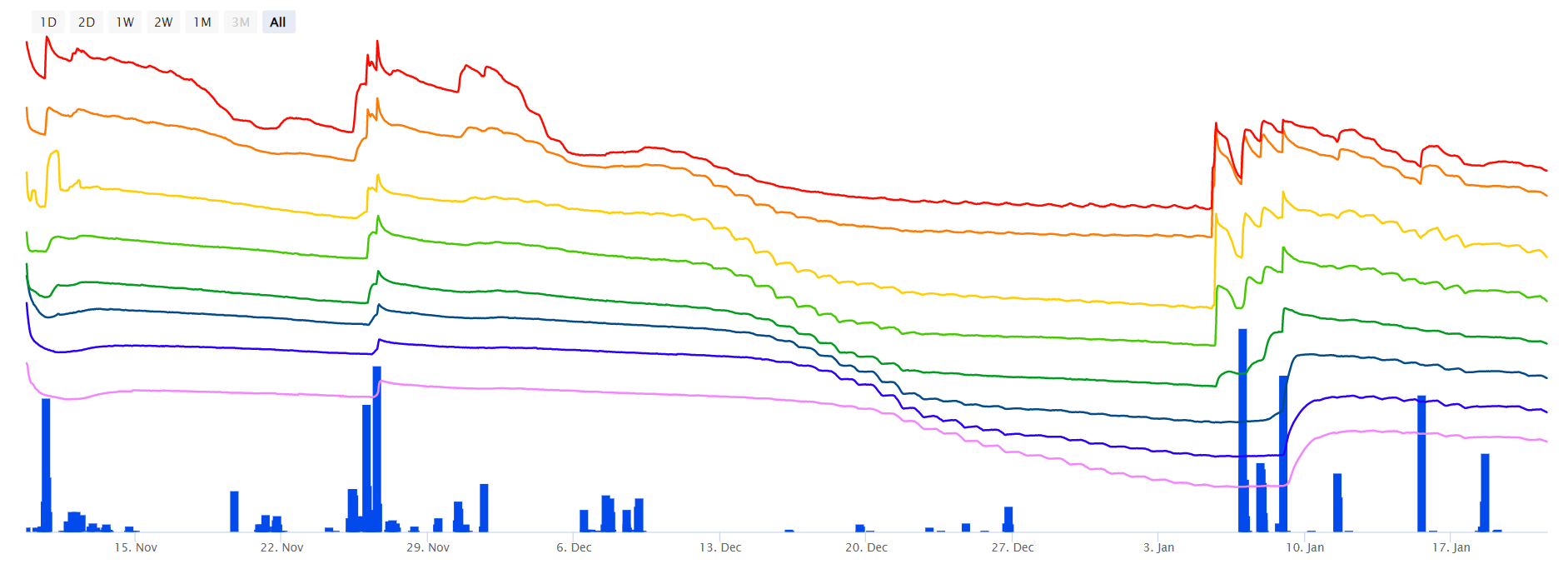
The depth the wetting front reaches, and how long it takes to get there, tells you a great deal about what is happening. If the wetting front stalls at 20 or 30 centimetres after 30 millimetres of rain, you have a soil with restricted infiltration or a layer that is slowing drainage — a clay band, a compaction layer, or a dry waxy layer that is hydrophobic. The surface looks wet and the profile chart looks encouraging at the top, but the subsoil has not received the recharge.
If the wetting front moves steadily through to 60 or 80 centimetres after a meaningful rainfall event, you have proper profile recharge. That is the signal you are waiting for before committing to a full planting program.
The Seasonal Context Makes All the Difference
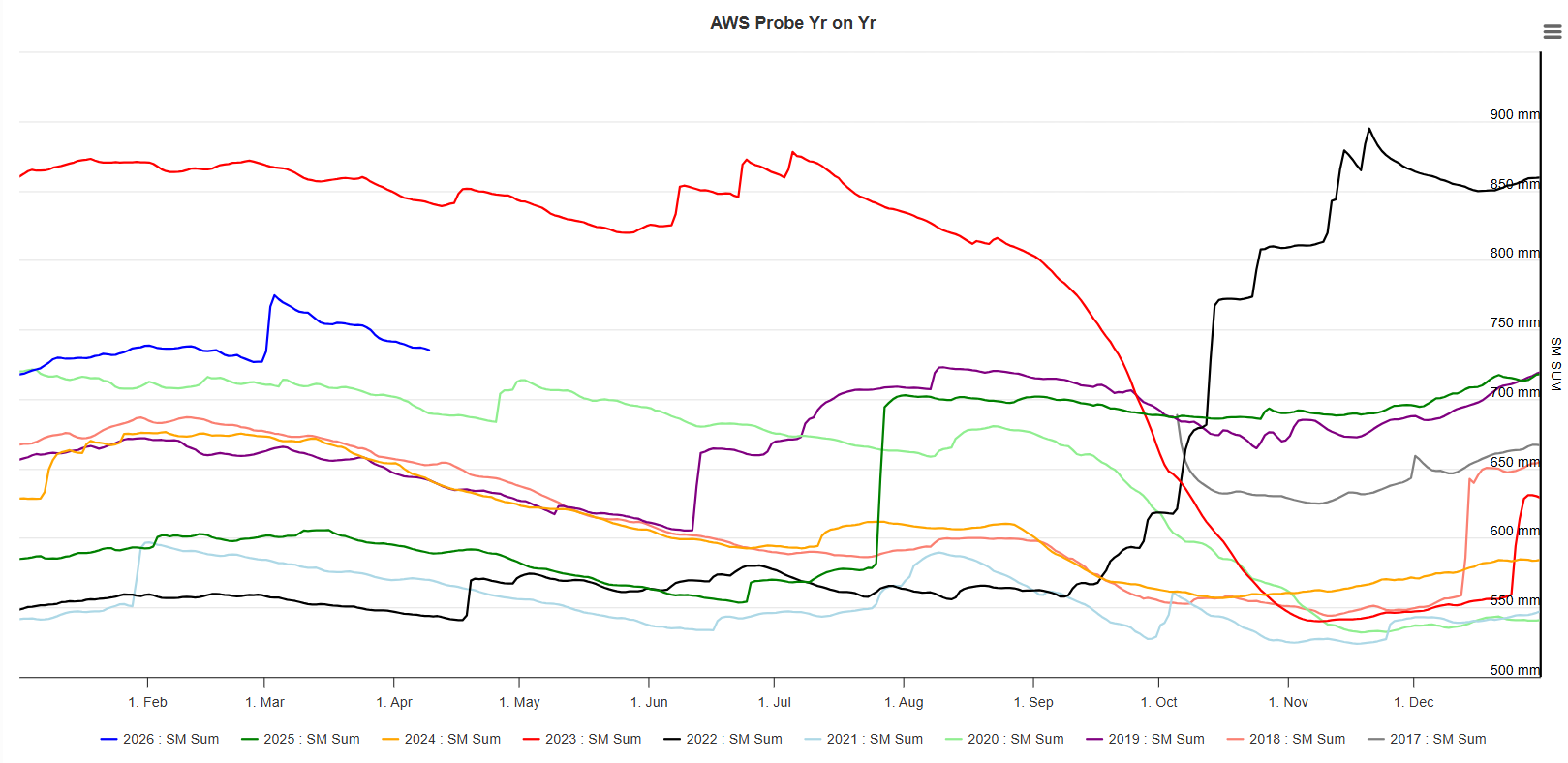
In a season where the subsoil entered winter already carrying moisture from the previous season or from summer storms, it does not need as much rain to recharge before planting. In a dry year following a dry summer, the subsoil may be at or below the permanent wilting point and it may take 60 to 80 millimetres of rain over several events just to refill what the summer took out before you start building genuine reserves for the crop.
Your soil moisture probe shows you exactly where you are starting from. Looking at the profile in March or April, before the autumn break, and comparing it to the same time in previous years gives you an immediate read on whether you are walking into a season with a tailwind or a headwind. That historical comparison is something that only becomes available once you have been logging soil moisture data for a few seasons.
Making the Call With Confidence
The practical decision-making framework is straightforward. Before deciding to plant, look at two things on your soil moisture chart: the current reading at seeding depth, and how deep the most recent rain event penetrated. If you have adequate moisture at seeding depth and a meaningful wetting front has reached at least 60 centimetres on your chart, you are in a good position to plant.
If you have moisture at the surface but the deeper sensors have not moved, you are planting into a risk situation. That does not necessarily mean you should not plant — timing and seasonal context still matter — but it means you are making a decision with full awareness of the downside rather than a false confidence that the rain has done more than it actually has.
BushLinx® soil moisture monitoring shows depth-by-depth readings in real time so you can see exactly where your wetting front reached after every rain event. Combined with the rainfall data from your on-farm weather station, it gives you the full picture — how much rain fell, how deep it went, and what is sitting in your profile heading into the cropping season.
See your profile before you plant
BushLinx® soil moisture probes show depth-by-depth readings in real time, so you know exactly how deep your wetting front reached before you commit to a planting program.
See Soil Moisture Probes → Talk to Tim