Why Cleaning Your Rain Gauge Is Not Optional
Tipping bucket rain gauges — the most common type used with telemetry systems in Australian agriculture — are susceptible to two failure modes: physical blockage of the funnel opening and spider webbs stopping the tipping bucket mechanism. A blocked funnel is the most common reason a gauge stops registering rainfall altogether; a spider web spun across the tipping spoon, stopping it from tipping freely, is the second most common. Both produce errors that are easy to miss if you are not checking. Cleaning should only take a minute.
How Often Should You Clean It?
Ultimately your rain gauge should be cleaned as often as it needs it. For most farm locations in Australia, cleaning your rain gauge thoroughly every three to four months is a reasonable routine to start with. You will quickly find out what times of year you will need to clean it out to ensure clean operation. That works out to four times a year — a quick job in February or March before the autumn season, again at the start of winter, at the start of spring, and going into summer.
There are also event-based cleaning triggers worth being aware of. After a very dry, dusty summer period, fine soil particles can accumulate in the funnel and block the outlet. After a wet, warm autumn, algae and biofilm growth inside the funnel can be rapid. Any time you notice your rain gauge reading appears different from what you observed or what nearby gauges are showing, a clean and inspection is warranted regardless of when you last did it. Seeing very slow 0.2mm tips occuring after a rain you think should be more is a sure sign something could be blocked
What You Need to clean a rain gauge
You do not need any specialist equipment. A soft brissle brush, a rag or a wad of grass will do just fine, and some rain gaudes you will need a screw driver. A can of Lanox (lanolin oil) or similar to keep the spiders out for longer.
Avoid steel wool, abrasive pads, or solvents — they can scratch the inside surfaces of the funnel and create rough spots where debris accumulates more easily, and some solvents will damage plastic components or leave residues that affect surface tension inside the tipping bucket.
Step-by-Step Cleaning Process
-
1
Remove the funnel. On some rain gauges this is a simple twist to release the locking lugs; on others it's a couple of screws.
-
2
Clean out the funnel. Wipe out any debris or mud so it's properly clean — otherwise the outlet hole just blocks straight back up.
-
3
Check under the funnel for spider webs around the tipping spoon. Clean them out and make sure the spoon tips with essentially no resistance. Be careful with it — it relies on a fine balance to measure (usually) 0.2mm of rain per tip.
-
4
Spray lanolin oil, such as Lanox, underneath the funnel and on the flat surface around the tipping spoon, and underneath the rain gauge as well. This keeps spiders out for longer.
Caution: Do not spray anything on the tipping mechanism itself, especially the pin that holds the tipping spoon. Any spray on the mechanism will collect dust and slow the tip down, which means less rain gets recorded. -
5
Re-fit the funnel.
How to Know If Your Gauge Is Reading Accurately
Cross-checking your gauge against a second gauge is the most reliable accuracy check. If you have two gauges on the property separated by a reasonable distance, comparing readings after significant rainfall events may not be an indicator that anything is wrong - rainfall regularly varies by a lot over short distances. A gauge that is consistently reading higher than nearby gauges after very light events may have a bucket that is tipping too easily — possibly dirty or incorrectly calibrated. The opposite is also possible
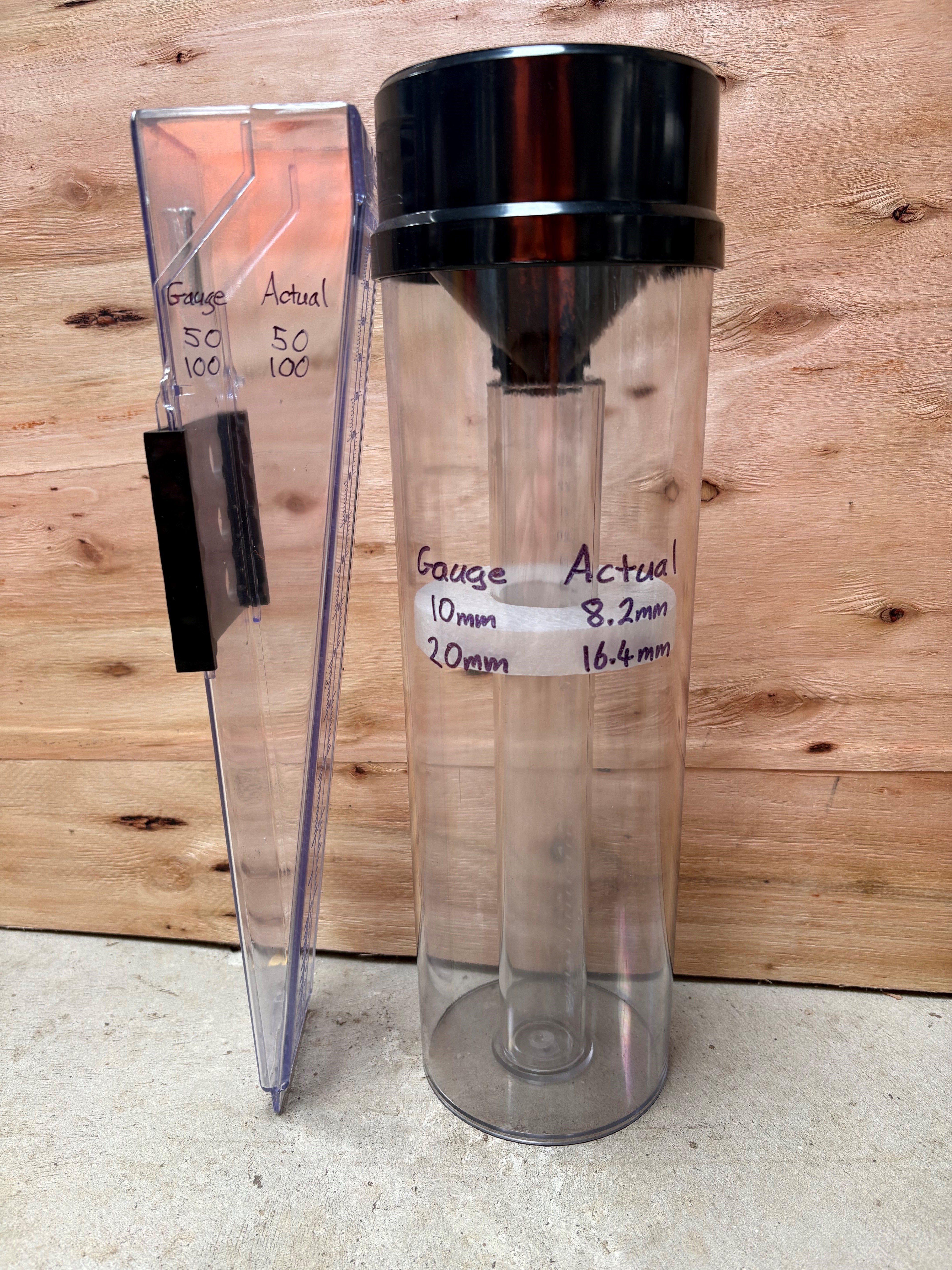
Its also worth noting not all rain gauges are created equal. When using a manual gauge to check the accuracy of a tipping bucket rain gauge on your weather station, its worth noting the commonly avilable round rain gauges found at your local hardware store often record around 20% more rain than actually fell.
The BushLinx® platform logs your rainfall data over time, and the history of your gauge readings makes it much easier to spot when something has changed. A sudden drop in recorded rainfall events — especially if nearby gauges and weather forecasts suggest rain has been falling — is one of the clearest indicators that something is wrong with your gauge and a clean or inspection is overdue.
Track your rainfall data over time
BushLinx® weather stations log your on-farm rainfall continuously, so you can spot gauge anomalies in historical data and have confidence your readings are accurate.
See Weather Stations → Talk to Tim